
2025 as an Inflection Point: Visibility Without Durability
2025 marked a visible shift in Syria’s startup ecosystem, driven by converging entrepreneurial, institutional, and diaspora activity. This convergence increased exposure and alignment across actors and regions. However, it did not translate into sustained scale or investment depth. The ecosystem remains in transition rather than consolidation.
Entrepreneurial Energy Exists, but System Architecture Lags
Founders demonstrate strong ambition, adaptability, and technical capacity. The binding constraint lies in weak legal, financial, and infrastructural systems. These gaps prevent entrepreneurial energy from compounding into durable growth.
As a result, progress remains fragile and uneven.
Fragmentation Over Coordination Limits Collective Progress
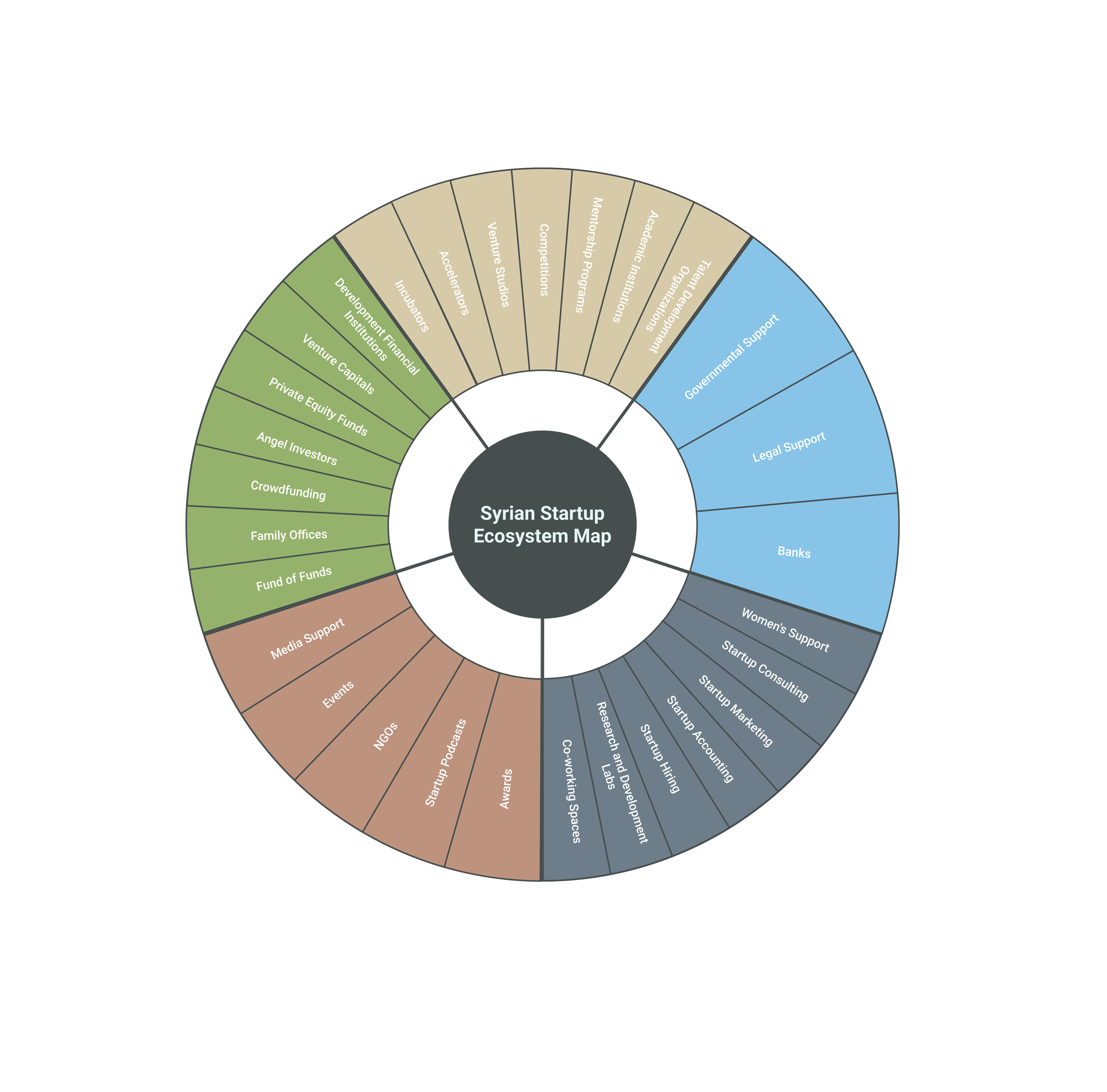
The ecosystem contains many active institutions and support programs, which mostly operate in parallel, with limited coordination or shared pathways. Effort is sometimes duplicated, while learning fails to accumulate across cohorts. Fragmentation is the core structural challenge.
Founders Are Advancing Faster Than the Systems Around Them
Founder mindsets shifted in 2025 toward experimentation and cohort identity. Digital adoption increased, and fear around innovation declined. Yet payments, regulation, talent access, and monetization remain constrained. Entrepreneurial ambition exceeds system readiness.
2026 Requires Coherence and a Well-Designed Ecosystem
The priority for 2026 is strengthening coherence rather than increasing activity. Progress should be measured by predictability, alignment, and system legibility. Small structural improvements can unlock disproportionate impact. The strategic objective is durability, not volume.